
Kasımpaşa Mevlevihanesi · Istanbul · est. 1631
The whirling dervishes of Istanbul,
at a real Mevlevihane.
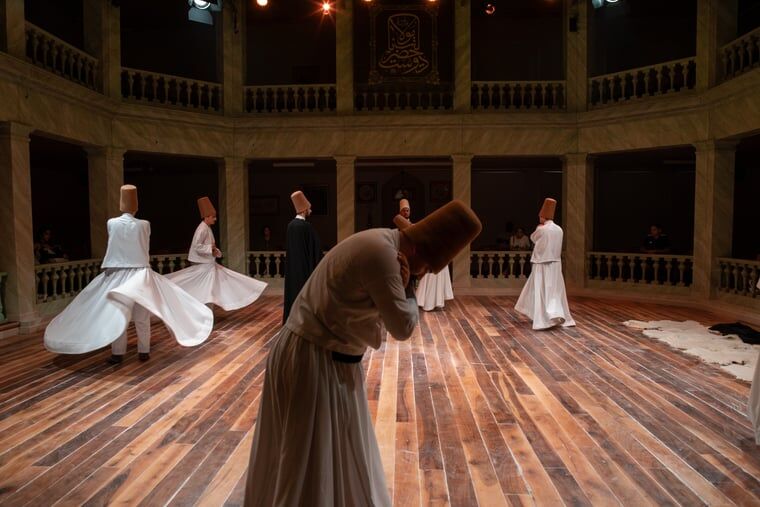
The Sema, the ritual of Rumi's order, performed as worship at our 17th-century lodge. Live ney, kudüm and rebab, never a recording. Wednesday, Friday and Sunday evenings at five.
Free cancellation up to 48h. Email confirmation in minutes.

- UNESCO Intangible Cultural Heritage
- 2008 UNESCO Intangible Cultural Heritage
- A working mevlevihane, on its original site
- 1631 A working mevlevihane, on its original site
- Seats per ceremony, whirled by initiated semazens
- 180 Seats per ceremony, whirled by initiated semazens
“An oasis in the heart of Istanbul.”
“Not touristy. A quiet, reverent atmosphere.”
The Ceremony
What you will witness, in seven movements.
- i
Naat-ı Şerif
A single voice opens the ceremony, praising the Prophet alone in stillness.
- ii
Kudüm Vuruşu
The drum strikes: the first heartbeat of creation, calling the dervishes to attention.
- iii
Ney Taksimi
The reed flute laments its separation from the reed bed. Rumi's whole poetry begins here.
- iv
Devr-i Veledi
The dervishes circle the hall three times, each greeting another in the meeting of souls.
- v
Selâm I–IV
Across four salutes the whirling begins, builds, suspends, and descends, tracing the journey of the soul.
- vi
Son Peşrev
A closing instrumental returns movement to stillness, and the music releases the body.
- vii
Kur'an-ı Kerim
Recitation gives way to silence, and the ceremony ends as it began, with attention.
Before You Arrive
Practical, as a guest should be.
- Where
- Kasımpaşa, in Beyoğlu. A short taxi from Taksim or Galata. The lodge sits on a quiet, narrow street, so allow ten extra minutes to find the door. Address & directions →
- Duration
- 60 min. Doors open thirty minutes prior. Late entry is not permitted once the ney begins.
- Capacity
- 180 seats. Friday and Sunday evenings sell out earliest.
- Dress
- Smart casual, with shoulders and knees covered out of respect for the sacred space. Comfortable shoes.
- Photography
- Permitted in silence during the opening and the closing only. Never during the whirl.
- Children
- Welcome from age seven, provided they can remain quiet for the full hour. We do not recommend infants or toddlers; the silence is part of the ritual.
Upcoming
The next evenings.
All dates →Listen to the reed, how it tells a tale,
complaining of separations —Ever since they cut me from the reed-bed,
my cry has caused men and women to weep.
The Lineage
Seven centuries, unbroken.
Mevlana Celaleddin Rumi died in Konya in 1273. His son Sultan Veled gathered the followers of his father's path and shaped a ritual that has been performed almost continuously since: a ritual of turning, of reed flute, of meeting one's neighbour as a sacred guest. We carry that line.
In 1925 the dervish lodges were closed across the new Republic. For decades the Sema lived only in private rooms and quiet remembrance. Toward the end of the 20th century, mevlevihanes began to open their doors again as living houses of the way.
Kasımpaşa Mevlevihanesi was founded in 1631. The building you will enter has been restored, but the ceremony has not been adapted for you. It is performed as it has always been performed: tennure (the white robe of the shroud), sikke (the cylindrical hat of the tombstone), and hırka (the black cloak of the world), cast off at the threshold of the whirl.
An invitation
Come, come,
whoever you are.
Inscribed at the threshold of every mevlevihane
Reserve your evening